You’ve probably seen the 1989 motion picture When Harry Met Sally.  Whilst the title of this post might sound like it hints towards this film, you’ll be glad to hear that the two have nothing in common!
Now, before we go any further, you really do need to be familiar with Covenant Theology and Narrative Theology, otherwise very little I write below will make sense to you.
I can personally see the benefits of Narrative Theology, but would like to offer an alternative view of the five act play presented by Wright[1] and adapted by Wells[2]. This view is not meant to discount the fine work of Tom Wright and Samuel Wells, rather it is intended to build upon the work.
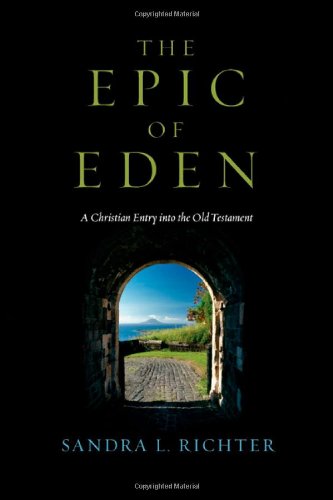
 Sandra Richter in The Epic of Eden offers Covenant as a way of reading the Old Testament. Covenant is a ‘structuring point for the history and theology of redemption’.[3] As we learned previously, Covenant can also be seen as a ‘contract’.[4] Viewing scripture in this way should help give biblical authority to Narrative Theology. Richter sees Covenant as the narrative of God accomplishing his plan of bringing the ‘children of Adam’ safely home to Him.[5]
The table below summerises Tom Wright’s and Samuel Wells’ views of the Five Act play of Narrative Theology. It also contains theologyidiot’s own interpretation; this will be discussed later.
| Act | Tom Wright | Samuel Wells | theologyidiot |
| I | Creation (Genesis 1 and 2) | Creation and Fall (Genesis 1 to 3) | Creation and Fall |
| II | Fall (Genesis 3) | Israel (Genesis 12 to the New Testament) | Old Covenant
Scene i – Noah Scene ii – Abraham Scene iii – Moses Scene iv – David |
| III | Israel (Genesis 12 to the New Testament) | Jesus (The Gospels)
Central to the narrative |
Jesus (The Gospels)
New Covenant |
| IV | Jesus (The Gospels) | The church living an improvised performance (beginning at Easter and Pentecost) | The church |
| V | The church living an improvised performance (beginning at Easter and Pentecost) | The Eschaton (see Eschatology)
This puts the sovereignty of God in the outcome of his creation |
The Eschaton |
Act One, like Samuel Wells would be Creation and the Fall.[6] This act would run right up until Act Two, which begins with Noah. Act Two would be called Old Covenant and would cover the remainder of the Old Testament. Each of the Divine Covenants; Noah, Abrahamic, Mosaic and Davidic would be a scene within this act. Act Three, and centrally placed like Wells’ would be Jesus. Here would also begin a narrative which will not be completed until Act Five, that of New Covenant
 Act Four would then be the Church improvising to a planned, but unscripted narrative towards Act Five, the Eschaton.
The Eschaton would be the finale of the play taking us from Creation to the New Creation. Like James Graham’s play Privacy, this play requires audience participation, with no room for passivity.[7]
[1] Tom Wright, ‘How Can The Bible Be Authoritative?’, 1991 <http://ntwrightpage.com/Wright_Bible_Authoritative.htm> [accessed 31 March 2015]
[2] Samuel Wells, Improvisation: The Drama of Christian Ethics (London: SPCK Publishing, 2004), p.. 53.
[3] Sandra L. Richter, The Epic of Eden: A Christian Entry into the Old Testament (Downers Grove, Ill: IVP Academic, 2008), p. 91.
[4] Richter, pp. 61–91.
[5] Richter, p. 224.
[6] Richter, p. 103.
[7] Mark Lawson, ‘Paying to Play: The Rise and Risks of Audience Participation’, The Guardian <http://www.theguardian.com/stage/2014/may/12/rise-and-risks-of-audience-participation> [accessed 2 April 2015].

 1. The Vassel is Jesus Christ on behalf of the whole of humanity.
 The New Covenant is cut by Jesus’ death to

 If Yahweh’s Sinai Covenant created the nation of Israel, then his Covenant with King David establishes his kingdom forever in
 Looking forward, we can see that King Solomon builds the temple, the house for Yahweh’s name (

 ‘Sola’ means single or sole, whilst ‘Scriptura’ means scripture. This gives us the short phrase ‘by scripture alone’.
 With Sola Scriptura, the Bible could be seen as a combination of the referee and the rule book, the only source of what is (in footballing terms) allowed or disallowed.

 4. The terms given to Israel are the Decalogue, more commonly known as the ten commandments (

 2. The contents of the Covenant are that Yahweh promises to give Abram as many descendants as there are stars in the sky (
 The Covenant is cut by Yahweh passing through the Abram’s sacrifice (

 The first of these Covenants can be found after the epic adventure of Noah’s Ark in
 3. Yahweh’s seal of his Covenant is the rainbow, which serves as a reminder that he will never destroy all life (